Village Voice Articles
Articles by the RPC are often included in the Riverwoods Village Voice newsletter and are easily referenced on this site.
Click below for past articles.
|
Money Trees
November - December, 2013
Trees are amazing! They’re like money trees, increasing the value of your property, reducing A/C needs, and increasing health and lowering medical bills by reducing asthma in kids to lowering your blood pressure (really!). Read more...
|
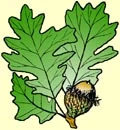
How to Grow an Oak Tree from an Acorn
September - October, 2013
Grow your own trees! Every year the acorns fall. Sometimes it’s a light rain. Sometimes it’s a blizzard. Here an easy step-by-step approach to growing trees from those tiny little acorns. Read more…
|
Water: Too Little, Too Much
July-August, 2013
It was standing room only and a record crowd for a panel discussion of water problems in Riveroods. Here’s the summary. Read more…
|
Garlic Mustard
May-June, 2013
The invaders are here! Early spring is the time to confront garlic mustard. Here are some techniques. Read more…
|
The Need for Canopy Thinning
March-April, 2013
Our oak-hickory woodlands are at a critical point. Oak seedlings have a difficult time sprouting and surviving, because of deer and shade. To address the problem, the Village has adopted an innovative canopy thinning cost-sharing program. Read more…
|
Rain Garden Demonstration Site
January - February, 2013
On October 2, the Riverwoods Preservation Council completed the first of its two planned rain garden demonstration sites on Village property. Here’s a description of the project. Read more…
|
Recycling: The Goal and the Challenge For Riverwoods
November - December, 2011
Lake County is facing a dilemma. Current landfills within the County are reaching capacity and no new landfills are available. Some estimate that we may have as few as 10-12 years of capacity left. Recycling makes good economic sense. In the first two quarters of 2011, the Village of Riverwoods received over $13,000 for recycled materials sent to Recycle America. Recycling makes sense for Riverwoods residents, too. Read more...
|
Rain Barrels: Practical and Environmentally Beneficial
March - April, 2011
How much water can you expect to collect from a rain barrel? A house whose footprint is 1,000 square feet could collect 600 gallons of water for every inch of rainfall! Rainwater can be used to water indoor or outdoor plants. Rain barrels are a convenient way of collecting free, uncontaminated water for your plants. Read more...
|
Composting With Worms! A Perfect Winter Project
January - February, 2011
Why worms? Worms can spin flax into gold, so to speak. By summer your garden will have spectacular, nutrious vermicompost (that's worm poop in lay terms) and you will have kept numerous bags of garbage out of the landfill. Read more...
|
Reforestation 101: Canopy Thinning
September - October, 2010
Fire suppression, deer overbrowse and development have createdmany changes in our woodlands. Without fire, the woodlands have been invaded by aggressive, shade-tolerant understory trees. These trees closed the canopy, creating a darker, more forest-like environment. Little light remained for oak seedlings and diverse ground layer plants. Deer remove most of the oak saplings that do grow. Careful canopy thinnning can help. Read more...
|
Counting Deer in Riverwoods
March - April, 2010
Each winter since the 1980's the Lake Count Forest Preserved District has counted deer via aerial survey in Ryerson Woods. The LCFPD count includes roughly the western half of Riverwoods - west of Portwine Road and Kenilwood Laqne - since deer tend to move between adjacent areas of Riverwoods and Ryerson. Read more...
|
Another Technique in Woodland Restoration - Prescribed Burning
January - February, 2010
Unlike fall leaf burning, which is a simple cleanup mechanism used by homeowners, a prescribed burn offers numerous benefits including efficient invasive reoval, nutritional recycling and increased sed production by native flora. It's done by professionals, under EPA and Village permits. Read more...
|
Progress Report - RPC Woodland Health Study Progress Report
September - October, 2009
In late 2008 we embarked on a woodland health study, working with outside experts. Individuals from Audubon Society and Lake County Forest Preserve, as well as RPC volunteers, offered advice and helped collect field data. The study found that Riverwoods' woodlands are suffering in several respects. Read more...
|
Progress Report - RPC Woodland Health Study Progress Report
May - June, 2009
Phase I of the study, conducted on the sample sites last September, showed almost a complete absence of oak saplings and of shrubs taller than one meter, a high percentage of bare ground, the replacement of oaks with maples and other tree species, and predominantly poor or fair diversity and quality of the perennial (herbaceous) plants on the woodland floor. Read more...
|
|
Summer Dreaming ~ Winter Composting
January - February, 2009
Although it’s only January, does the winter already seem to have gone on too long? Composting with worms is an easy winter project that will benefit not only your summer garden but the greater environment as well. Read more...
|
Rain Gardens are Great!
September - October, 2008
Well, you've probably heard about rain gardens but what really is a rain garden? Let's make a quick review of this smart, sustainable and natural way to reduce storm water runoff and protect our waterways. Read more...
|
The Best Spring Ever - with thoughts on Pesticides
May - June, 2008
Enjoyment comes in many forms. But however it’s done it should not be harmful – not to us, to our children, to the non-human inhabitants of our region, or to those who come after us. Read more...
|
|
Living in Harmony with Mother Nature
January - February, 2008
We create imbalance by the choices we make. Your commitment is essential if we are to preserve this extraordinary natural heritage of Riverwoods. Read more...
|
Protecting the Woodlands
November - December, 2007
To help decision-makers develop policies to protect the health of wooded areas, Chicago Wilderness prepared a document summarizing some of the challenges. Read more...
|
The Buzz is Gone
September - October, 2007
Honeybees are threatened and scientists are trying to figure out why. Read more...
|
More on the Emerald Ash Borer
September - October, 2007
The Village of Riverwoods has enacted an ordinance concerning trees damaged by the Emerald Ash Borer. Read more...
|
|
Poison Ivy
May - June, 2007
Poison ivy thrives in the Riverwoods woodlands and along the roadways. Read more...
|
|
|
Oak Trees
November - December, 2006 and March - April, 2007
Did you know there are over 400 species of oaks? Read more...
|
Fall Leaves
September - October, 2006
It's fall. What do you do with all of those leaves? Read more...
|
Mulch
July - August, 2006
Trees and other plants growing in natural settings, such as woodlands, do best with the natural mulch that occurs when branches and leaves fall and decompose on the forest floor. Read more...
|
Emerald Ash Borer
July - August, 2006
The emerald ash borer is a serious threat to ash trees in Illinois and much of the U.S. Recently the insect was found in Kane and Cook County. Read more...
|
Living with Deer
March - April, 2006
Determining how to live with deer has been one of the more controversial issues in Riverwoods. Read more...
|
Riverwoods Invasive Plants
January - February, 2006
There are two non-native plants that are threatening our woodlands more than any others. They are Common Buckthorn (Rhamnus cathartica) and Garlic Mustard (Alliaria petiolata). There is also one native plant to watch out for that moves into disturbed areas and spreads easily -- Poison Ivy ( Toxicodendron radicans). Read more...
|
Animals in Winter
January - February, 2006
Animal species have two general approaches to winter: migration and adaptation. Read more...
|
Salt and De-Icers
January - February, 2006
Preservation issues dictate many aspects of Riverwoods life, and use of road salt is a primary example. Read more...
|
|
The Village of Riverwoods
January - February, 2006
Riverwoods is special. Our woodlands are a complex ecosystem of native, interdependent plant species which foster the active growth of oaks and other forest trees, as well as a variety of wildlife. Read more...  Back to Top Back to Top
(Photograph of male cardinal by Ho Min Lim)
|